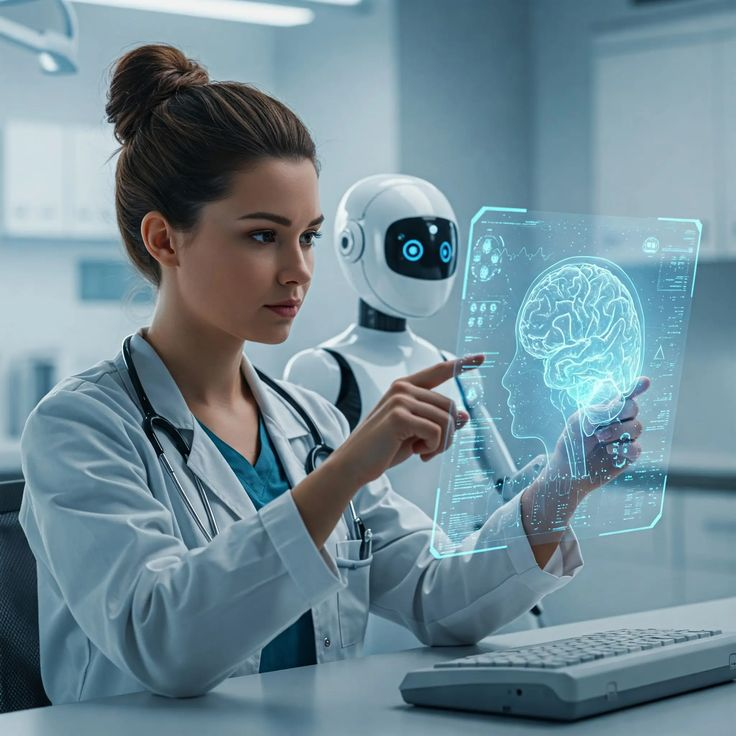

Artificial Intelligence is changing many industries, but healthcare is one of the areas where AI is creating the biggest impact. Hospitals, doctors, researchers, and medical companies are now using AI-powered systems to improve patient care, diagnose diseases faster, and increase medical efficiency.
Healthcare professionals deal with huge amounts of information every day. Artificial Intelligence helps analyze this data quickly and accurately, allowing doctors to make better decisions and provide improved treatment.
From virtual assistants and robotic surgeries to disease prediction and personalized medicine, AI is transforming the future of healthcare. Many experts believe that AI technology will continue improving medical services and saving lives in the coming years.
In this article, you will learn how AI in healthcare works, its major benefits, practical applications, challenges, and the future of Artificial Intelligence in the medical industry.
What is AI in Healthcare?
AI in healthcare refers to the use of Artificial Intelligence technology in medical systems and healthcare services.
AI systems can:
- Analyze medical data
- Detect diseases
- Support doctors
- Predict health risks
- Automate tasks
- Improve patient care
These systems use technologies such as machine learning, deep learning, and data analysis to assist healthcare professionals.
Why AI is Important in Healthcare
Healthcare organizations manage large amounts of patient information daily.
AI helps healthcare systems by:
- Reducing human error
- Improving diagnosis speed
- Saving time
- Supporting medical research
- Enhancing patient experiences
Artificial Intelligence allows healthcare professionals to focus more on patient care instead of repetitive administrative work.
AI for Disease Detection
One of the most powerful uses of AI in healthcare is disease detection.
Faster Diagnosis
AI systems can analyze medical images and patient data faster than traditional methods.
Example
AI software can examine X-rays, MRIs, and CT scans to identify signs of diseases such as:
- Cancer
- Pneumonia
- Heart disease
Early diagnosis can improve treatment success rates.
Improved Accuracy
AI helps reduce diagnostic mistakes by analyzing patterns in medical data.
Doctors can use AI as a support tool for better decision-making.
AI in Medical Imaging
Medical imaging has become one of the most advanced areas of healthcare AI.
How AI Helps in Imaging
AI can:
- Detect abnormalities
- Highlight suspicious areas
- Compare previous scans
- Improve image quality
Example
Radiologists may use AI tools to identify small tumors that are difficult to notice manually.
This technology improves both speed and accuracy.
AI-Powered Virtual Assistants
Virtual healthcare assistants are becoming increasingly popular.
Functions of AI Health Assistants
They can help patients by:
- Answering health questions
- Scheduling appointments
- Sending medication reminders
- Monitoring symptoms
These assistants improve communication between patients and healthcare providers.
AI in Personalized Medicine
Every patient is different, and AI helps create personalized treatment plans.
How Personalized Medicine Works
AI analyzes:
- Medical history
- Lifestyle habits
- Genetics
- Current health conditions
Based on this information, doctors can provide customized treatments.
This approach may improve recovery rates and reduce side effects.
Robotic Surgery and AI
AI-powered robotic systems are helping surgeons perform complex operations.
Benefits of Robotic Surgery
- Greater precision
- Smaller incisions
- Reduced bleeding
- Faster recovery
- Lower risk of complications
Although surgeons still control the process, AI technology improves surgical accuracy.
AI in Drug Development
Developing new medicines is usually expensive and time-consuming.
AI helps researchers by:
- Analyzing chemical data
- Predicting drug effectiveness
- Identifying possible side effects
- Speeding up research processes
This technology may help pharmaceutical companies develop treatments faster in the future.
AI in Patient Monitoring
Hospitals now use AI systems to monitor patient health in real time.
Smart Monitoring Systems
AI devices can track:
- Heart rate
- Blood pressure
- Oxygen levels
- Sleep patterns
If unusual changes appear, healthcare staff receive immediate alerts.
This improves patient safety and emergency response.
AI in Mental Health Support
Mental health services are also using Artificial Intelligence.
AI Mental Health Applications
Some AI systems provide:
- Emotional support chatbots
- Stress monitoring
- Therapy assistance
- Mood tracking
Although AI cannot replace professional therapists, it can provide additional support for patients.
Benefits of AI in Healthcare
Artificial Intelligence offers many advantages for healthcare systems.
Faster Medical Services
AI can process information quickly and reduce waiting times.
Better Accuracy
AI reduces human mistakes in diagnosis and analysis.
Cost Reduction
Automation helps hospitals save operational costs.
Improved Patient Care
Doctors receive better support for treatment decisions.
Increased Efficiency
Healthcare staff can focus more on patient interaction and treatment.
These benefits are driving rapid AI adoption worldwide.
Challenges of AI in Healthcare
Despite its advantages, AI also creates several challenges.
Privacy Concerns
Healthcare data is highly sensitive and requires strong security protection.
High Implementation Costs
Advanced AI systems can be expensive for smaller hospitals.
Dependence on Technology
Overreliance on AI may reduce human involvement in decision-making.
Ethical Questions
Questions about fairness, transparency, and responsibility continue growing.
Healthcare organizations must balance technology with human care.
Can AI Replace Doctors?
Many people wonder whether AI will replace healthcare professionals.
The answer is likely no.
AI is designed to assist doctors rather than completely replace them.
Human Skills Still Matter
Doctors provide:
- Emotional support
- Critical thinking
- Human judgment
- Patient communication
AI works best as a supportive tool alongside healthcare professionals.
Practical Example
Imagine a hospital using AI-powered healthcare systems.
A patient arrives with chest pain. The AI system quickly analyzes:
- Medical history
- Heart rate
- Blood test results
- Imaging scans
The system identifies possible heart problems and alerts doctors immediately.
As a result, doctors begin treatment faster and improve the patient’s chances of recovery.
This example shows how AI can support life-saving medical decisions.
Future of AI in Healthcare
The future of AI in healthcare looks extremely promising.
Experts believe future AI systems may provide:
- More accurate disease prediction
- Fully personalized treatment plans
- Faster drug development
- Improved robotic surgeries
- Remote healthcare support
AI may also improve healthcare access in remote and underserved areas.
Technology will likely continue transforming modern medicine.
AI and Wearable Technology
Wearable devices are becoming smarter with AI integration.
Popular AI Wearables
- Smartwatches
- Fitness trackers
- Health monitoring devices
These devices help users track their health daily and detect possible medical issues early.
AI During Global Health Crises
AI played an important role during global health emergencies.
How AI Helped
- Tracking disease spread
- Analyzing medical data
- Supporting vaccine research
- Predicting outbreaks
This showed the importance of AI in modern healthcare systems.
FAQs
What is AI in healthcare?
AI in healthcare refers to using Artificial Intelligence technology to improve medical services, diagnosis, and patient care.
How does AI help doctors?
AI helps doctors analyze data, detect diseases faster, and support treatment decisions.
Can AI diagnose diseases?
Yes, AI systems can analyze medical images and patient data to assist in disease detection.
Is AI replacing healthcare workers?
AI is designed to support healthcare professionals, not fully replace them.
What are the risks of AI in healthcare?
Privacy concerns, high costs, and ethical challenges are some common risks.
What is the future of AI in medicine?
AI is expected to improve personalized treatment, robotic surgery, disease prediction, and healthcare efficiency.
Conclusion
AI in healthcare is transforming the medical industry by improving diagnosis, treatment, patient monitoring, and medical research. Hospitals and healthcare providers are using Artificial Intelligence to increase efficiency, reduce errors, and provide better patient care.
Although AI offers many benefits, challenges such as privacy, ethical concerns, and implementation costs still exist. Responsible use of AI technology will remain important for the future of healthcare.
Artificial Intelligence is not replacing doctors but helping them make smarter and faster decisions. As technology continues advancing, AI may become one of the most valuable tools in modern medicine.
The future of healthcare will likely combine human expertise with powerful AI systems to create safer, faster, and more effective medical services for people around the world.